








For more than a decade, Lewis Hamilton has been one of Formula 1’s biggest names, but his career has become about much more than what happens on a racetrack. The seven-time world champion has built a business portfolio around racing, fashion, entertainment and global brand partnerships, turning sporting success into a much broader commercial career. That makes Lewis Hamilton net worth one of the most searched questions about the Mercedes and Ferrari-era superstar. While no public source can provide an exact real-time personal balance sheet, available estimates and documented earnings provide a useful picture of how Hamilton accumulated his wealth.
Lewis Hamilton Net Worth: What the Estimates Show
There is no officially published figure for Hamilton’s total personal wealth. Celebrity wealth websites frequently produce different estimates, and those numbers can change depending on whether they count business interests, property, investments, taxes and other private assets. A more reliable approach is therefore to look at documented salary information, endorsement earnings, business ventures and major contracts rather than treating any single online estimate as an audited figure.
Forbes has consistently ranked Hamilton among Formula 1’s highest-paid drivers. Its athlete earnings estimates have also shown how dramatically his income has grown beyond his racing salary. Hamilton’s Ferrari move added another major chapter to that financial story, while his long-running relationships with global companies have helped make him one of the sport’s most commercially valuable athletes. Consequently, any discussion of Lewis Hamilton net worth should consider both his Formula 1 income and the business empire surrounding his public profile.
How Formula 1 Created Hamilton’s Financial Foundation
Hamilton entered Formula 1 with McLaren in 2007 and immediately established himself as a championship-level driver. He won the 2008 world championship before moving to Mercedes for the 2013 season. That decision proved financially and competitively transformative. Mercedes developed into the dominant team of the hybrid era, and Hamilton won six additional championships between 2014 and 2020.
Success at that level creates multiple income streams. A Formula 1 driver’s team salary forms the foundation, but championship bonuses, performance incentives and commercial opportunities can substantially increase total earnings. Hamilton’s long association with Mercedes therefore became much more than an employment relationship. It positioned him as the face of one of the world’s most recognizable automotive brands during one of the most successful periods in modern Formula 1 history.
Hamilton’s Salary Has Been One of His Biggest Assets
Hamilton has earned some of the highest salaries in Formula 1 history. Exact contractual details are generally private, but major financial publications have repeatedly reported annual compensation running into the tens of millions of dollars before endorsements and other commercial income. Forbes has also placed Hamilton among the world’s highest-paid athletes, illustrating the enormous financial value of elite Formula 1 drivers.
His compensation has varied across different contract periods, and performance bonuses can make a meaningful difference. Championship victories, race wins and other achievements can increase earnings depending on contractual arrangements. That means calculating Lewis Hamilton net worth from a single annual salary figure would be misleading. Wealth is accumulated over many seasons, while income can fluctuate substantially from one year to another.
The Ferrari Move Changed the Financial Conversation
Hamilton’s move from Mercedes to Ferrari for the 2025 Formula 1 season became one of the biggest sporting stories of the decade. It was significant not only because of the competitive implications, but also because Ferrari is arguably the most commercially powerful name in Formula 1. The move placed Hamilton inside an entirely different brand ecosystem and created enormous global attention around his career.
Reports surrounding Hamilton’s Ferrari contract have suggested extremely large potential earnings, although the precise financial terms have not been publicly confirmed in full. That uncertainty matters when calculating personal wealth. A reported contract value is not automatically equivalent to cash in a driver’s bank account, and gross compensation should not be confused with after-tax wealth. Nevertheless, the Ferrari relationship has clearly added another major commercial dimension to Hamilton’s career.
Endorsements Have Expanded His Earnings Beyond Racing
Hamilton’s commercial value extends far beyond Formula 1. Over the years, he has partnered with major international companies across fashion, technology, luxury goods, automotive products, consumer brands and lifestyle categories. Those relationships have allowed him to earn substantial sums even when he is not competing in a Grand Prix.
This is one of the most important reasons Lewis Hamilton net worth cannot be understood simply by examining his Formula 1 salary. Sponsorship agreements can generate significant income while simultaneously strengthening an athlete’s global reputation. Hamilton has also cultivated an image that reaches audiences outside traditional motorsport, particularly through fashion, music, film and social causes. That broader cultural influence increases the number of industries that can see commercial value in his name.
Tommy Hilfiger Became a Major Hamilton Partnership
One of Hamilton’s most visible fashion relationships has been with Tommy Hilfiger. The partnership went beyond traditional athlete endorsement and developed into collaborative collections, giving Hamilton a creative role in fashion projects associated with the brand.
That relationship helped reinforce a key part of Hamilton’s modern public identity. He is not marketed solely as a racing driver; he has increasingly presented himself as a fashion-conscious global celebrity. His appearances at major fashion events and collaborations with designers have broadened his commercial reach. As a result, the business side of Hamilton’s career increasingly overlaps with entertainment and luxury fashion rather than remaining confined to motorsport sponsorship.
Hamilton Has Built Businesses Outside Formula 1
Hamilton has also invested in ventures that allow him to participate in industries beyond racing. One of his most recognizable business projects is Neat Burger, the plant-based restaurant company he helped launch. The venture positioned him as an investor and public advocate for alternative food concepts.
He has also developed projects connected to entertainment and media. His involvement with film and television projects has opened another potential revenue stream while extending his influence beyond sport. The most notable example is the Formula 1 movie F1, produced by Apple Original Films and starring Brad Pitt, with Hamilton serving as a producer and important creative figure around the project. These activities show why Lewis Hamilton net worth is better understood as the result of a diversified career rather than a driver’s paycheck alone.
Hamilton’s Production Career Adds a New Dimension
Hamilton’s involvement with F1 represented a major step into Hollywood. Rather than simply appearing as a celebrity guest, he became involved in the production process and helped ensure that the fictional racing story reflected the culture and technical realities of Formula 1.
The movie also demonstrated the commercial strength of the Formula 1 brand itself. Hollywood studios increasingly recognize the global audience surrounding the championship, while Formula 1 has expanded its presence in the United States and other markets. Hamilton sits at the intersection of both worlds. His racing credibility gives him authority within motorsport, while his celebrity profile gives him access to entertainment opportunities that most professional drivers never receive.
Fashion Has Become Part of Hamilton’s Personal Brand
Hamilton’s interest in fashion has become one of the defining features of his public image. He frequently appears at international fashion events and has worked with designers and luxury brands. His distinctive clothing choices have made him one of the most recognizable style figures among professional athletes.
Commercially, this matters because personal branding can create value that lasts beyond sporting performance. A racing driver’s competitive career is ultimately limited by age, injuries and retirement. Fashion, entertainment and business ventures can continue after a driver leaves the grid. Hamilton has effectively been building those future income channels while still competing at the highest level, reducing his dependence on racing alone.
His Investments and Assets Are Not Fully Public
Another reason estimates of Hamilton’s wealth differ is that many personal assets and investments are private. Public reporting has identified luxury properties and high-value vehicles associated with Hamilton over the years, but the full structure of his investment portfolio is not publicly available.
It is therefore important to avoid presenting internet estimates as precise financial statements. A celebrity’s net worth typically represents an approximation based on publicly reported earnings and known assets minus estimated liabilities. It does not reveal bank balances or private investments. For Hamilton, this uncertainty is particularly relevant because his commercial activities span multiple industries and jurisdictions.
Hamilton’s Car Collection Reflects His Lifestyle
As one of the world’s most successful racing drivers, Hamilton has owned and driven a number of high-end performance vehicles. His connection to Mercedes also made luxury and performance automobiles a natural part of his public image.
However, expensive cars should not automatically be interpreted as the main source of his wealth. They are better understood as lifestyle assets within a much larger financial picture. His most valuable economic assets are likely connected to accumulated career earnings, commercial agreements, business interests and investments rather than any single vehicle. That distinction is important when evaluating online claims about Lewis Hamilton net worth.
Formula 1’s Growing Popularity Has Increased Driver Value
Hamilton’s wealth has also benefited from the broader expansion of Formula 1. The championship has grown significantly in the United States, helped by the success of Drive to Survive, new races and increasing investment in the sport. Younger audiences have become more engaged with individual drivers as personalities rather than viewing them only through the traditional lens of team competition.
That trend increases the commercial importance of drivers who can connect with audiences outside hardcore motorsport. Hamilton was already a global celebrity before the latest growth period, which put him in an especially strong position. His social-media presence, fashion interests and activism have helped him reach audiences that may not watch every Grand Prix.
Lewis Hamilton’s Record Strengthens His Commercial Value
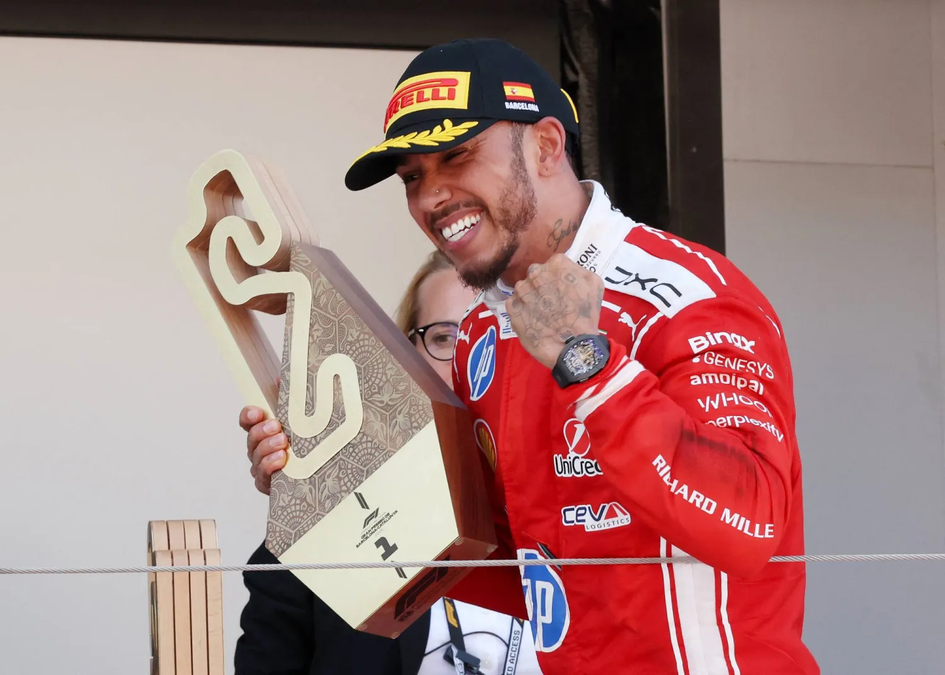
Hamilton’s financial success cannot be separated from his sporting achievements. He shares the record for seven Formula 1 world championships and has accumulated more Grand Prix victories than any other driver in the history of the championship. Those achievements give sponsors something that money alone cannot purchase: a historically significant sporting résumé.
Records also create long-term brand value. Even after a driver retires, championship victories and statistical achievements remain part of their public identity. Hamilton’s position among Formula 1’s greatest drivers therefore has potential value long beyond his final race. For brands, that kind of legacy can make a partnership more meaningful because the athlete’s name remains connected to an enduring sporting history.
Philanthropy Is Another Important Part of His Legacy
Hamilton has used his public platform to support social causes and charitable initiatives. Through the Hamilton Commission, he examined barriers facing Black people in UK motorsport and engineering, while the wider Mission 44 initiative has focused on supporting young people and increasing opportunity.
Philanthropy does not directly increase Lewis Hamilton net worth, but it is important when evaluating the broader impact of his career. Wealthy athletes increasingly use their platforms not only for commercial partnerships but also to influence social issues. Hamilton has made that part of his identity particularly visible, adding another layer to a career that extends well beyond competition.
How Much Could Hamilton Be Worth in the Future?
Future estimates will depend heavily on his Formula 1 earnings, Ferrari contract structure, investment performance and commercial activity. If Hamilton continues developing businesses and entertainment projects while maintaining major sponsorship relationships, his wealth could continue growing even as his racing career moves toward its later stages.
The more important trend, however, is diversification. Hamilton has already demonstrated that his value does not depend exclusively on winning races. Fashion, film, food, media and brand partnerships provide alternative sources of income and influence. That strategy could become increasingly important as he eventually moves from full-time competition toward the next phase of his career.
What Readers Should Know About Celebrity Net Worth Estimates
Online net worth figures should always be treated as estimates rather than audited facts. Websites may use different assumptions about gross salary, taxes, sponsorship income, property values, investment returns and spending. They may also update their figures at different times, which explains why two sites can publish dramatically different numbers for the same celebrity.
For a high-profile athlete such as Hamilton, the safest method is to look at established financial reporting and confirmed career information. Forbes, Formula 1, Ferrari, Mercedes and reputable business publications can provide useful evidence about earnings and contracts, while celebrity-estimate websites should be treated as secondary sources. This approach produces a more credible picture without pretending that private financial information is publicly available.
Key Takeaways
The most important point about Lewis Hamilton net worth is that no official audited figure is publicly available. However, his enormous Formula 1 earnings, championship bonuses, endorsements, investments and business interests clearly place him among the wealthiest drivers in the history of the sport.
His wealth has been built over nearly two decades at the highest level of motorsport. Seven world championships, more than 100 Grand Prix victories, long-term sponsorships and major contracts created the financial foundation, while fashion, restaurants, entertainment and media have helped diversify his income.
The Ferrari move added another major commercial chapter. Although the precise value of Hamilton’s contract has not been fully disclosed publicly, the move increased his global visibility and placed him with the most recognizable team in Formula 1.
Perhaps the most important lesson is that Hamilton’s financial strategy extends beyond racing. His work in fashion, film, entrepreneurship and philanthropy has transformed him from a successful driver into a global personal brand with opportunities that can continue after his competitive career ends.
Conclusion
The real story behind Lewis Hamilton net worth is not a single number. It is the result of almost two decades of elite sporting performance combined with a deliberate expansion into business, fashion, entertainment and global brand partnerships. His seven championships and extraordinary race record created the foundation, but his ability to turn sporting fame into a wider personal brand has made his financial story far more complex.
As Formula 1 continues to expand internationally and Hamilton’s Ferrari chapter develops, his commercial influence will remain an important part of his career. The exact value of his private wealth may remain unknown, but the forces behind it are much easier to see: historic racing success, major contracts, powerful endorsements and an increasingly diversified business portfolio.
For readers following Formula 1, celebrity finance and the business of sport, Hamilton’s career offers a useful example of how modern athletes can build wealth beyond competition. Keep following his Ferrari journey, business ventures and future projects to see how one of motorsport’s biggest stars continues to shape his legacy both on and off the track.
Frequently Asked Questions
What is Lewis Hamilton net worth?
There is no officially verified public figure for Hamilton’s total personal wealth. Estimates vary because his private investments, taxes, liabilities and asset values are not fully disclosed. His Formula 1 salary, endorsements and business ventures nevertheless make him one of the world’s highest-earning racing drivers.
How does Lewis Hamilton make his money?
His income comes primarily from Formula 1 compensation, performance-related earnings, sponsorships and brand partnerships. He has also developed business and entertainment interests, including fashion collaborations, restaurant investment and film production.
How much does Lewis Hamilton earn from Formula 1?
His exact current compensation is not publicly confirmed in full. Major financial publications have historically reported annual Formula 1 earnings in the tens of millions of dollars, with bonuses and commercial income potentially adding substantially to the total.
Did Ferrari increase Lewis Hamilton’s earnings?
Hamilton’s Ferrari contract is widely regarded as a major financial agreement, but the complete contractual terms have not been publicly disclosed. Therefore, specific figures reported online should be treated as estimates unless supported by reliable financial reporting.
Is Lewis Hamilton one of the richest Formula 1 drivers?
Yes. His long career, seven world championships, record number of race victories, major sponsorships and business activities have made him one of Formula 1’s most commercially successful drivers.
Does Lewis Hamilton own businesses?
Hamilton has invested in and worked with businesses outside motorsport, including the plant-based restaurant company Neat Burger. He has also expanded into entertainment and film production, demonstrating an interest in building businesses and creative projects beyond racing.
Will Lewis Hamilton’s wealth continue to grow?
It could. His future financial growth will depend on racing income, investments, endorsements and business ventures. His diversification into fashion, entertainment and entrepreneurship gives him potential revenue opportunities beyond his Formula 1 career.