








A research dossier for target company is a comprehensive business document that brings together verified information about an organization, its leadership, financial performance, products, competitors, and potential risks. In 2026, businesses need reliable research to make informed decisions in increasingly competitive markets. Whether an investor is evaluating an acquisition, a company is considering a strategic partnership, or an analyst is studying a competitor, a well-organized dossier provides a clear foundation for understanding the business before taking the next step.
Preparing a detailed dossier involves more than collecting information from a company website. It requires comparing reliable sources, examining financial records, understanding the competitive environment, and identifying uncertainties that could affect a business decision. By combining these findings in one structured report, researchers can distinguish verified facts from assumptions and promotional claims. This guide explains the essential components, research methods, reliable sources, and practical strategies for creating a useful company due diligence report.
What Is a Research Dossier for a Target Company?
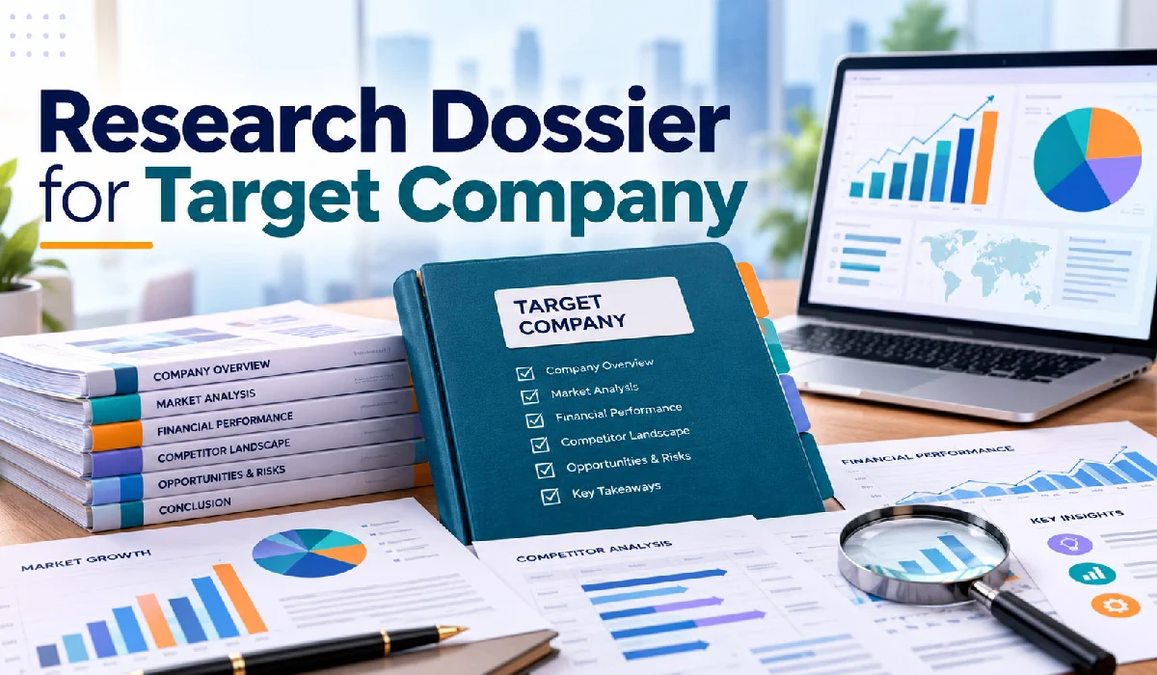
A research dossier for target company is a structured collection of business intelligence designed to explain how an organization operates, performs financially, competes in its industry, and manages potential challenges. It commonly includes corporate identity, ownership information, management backgrounds, products and services, financial statements, market analysis, legal considerations, and reputational findings. The document should present information in a clear format, allowing readers to understand the company’s position without searching through numerous disconnected sources.
Unlike a basic company profile, a dossier examines both opportunities and possible weaknesses. A company profile might describe its history, products, and headquarters, while a detailed research dossier investigates whether its financial position appears sustainable, whether its market claims are supported by evidence, and whether significant risks require further review. The depth of the investigation depends on its purpose, which may include investment research, mergers and acquisitions, supplier selection, partnership evaluation, or competitive analysis.
Why Is a Research Dossier Important for Due Diligence?
Due diligence helps individuals and organizations understand the facts before committing money, resources, or business relationships. A research dossier for target company supports this process by bringing relevant findings together in one document. Instead of relying on presentations or verbal assurances, decision-makers can review corporate records, financial information, market evidence, and documented concerns. This approach encourages careful evaluation and makes it easier to identify unanswered questions before negotiations or agreements move forward.
A well-prepared dossier can also improve risk management and strategic planning. For example, an investor may discover that a company’s revenue depends heavily on a small number of customers, while a potential partner may identify supply chain vulnerabilities or regulatory obligations. These findings do not automatically mean the business is unsuitable, but they indicate where additional investigation may be necessary. Clear documentation helps teams discuss concerns, compare alternatives, request clarification, and make decisions based on evidence rather than assumptions.
Key Components of a Company Research Dossier
The company background section establishes exactly which organization is being researched. Include its legal name, registration details, founding date, headquarters, operating locations, official website, and relevant trading names. Where information is available, document parent companies, subsidiaries, ownership changes, and significant developments in its history. These details help researchers distinguish businesses with similar names and establish a reliable starting point for the wider investigation.
Verification is particularly important when a company operates across multiple countries or uses different names for its products and services. Official corporate registries and company disclosures can help confirm registration details and business status. Researchers should record when information was published and whether it has been independently verified. A clear company profile creates a consistent reference point for the remaining sections and reduces the risk of attaching financial, legal, or reputational information to the wrong organization.
Leadership, Management, and Ownership Structure
Leadership information helps explain who directs the company and how important decisions are made. This section should identify founders, senior executives, board members, and major shareholders when reliable information is available. Relevant professional experience, previous leadership roles, governance responsibilities, and publicly documented executive changes can provide useful context. Researchers should prioritize official announcements, regulatory filings, and credible business publications instead of relying solely on unsourced online biographies.
Ownership analysis can reveal whether the business is privately held, publicly traded, controlled by a parent organization, or supported by institutional investors. A complicated ownership structure may require additional research to understand decision-making authority and related business relationships. Where legally available, beneficial ownership information can provide further clarity. The objective is not to speculate about individuals but to document relevant facts, identify unanswered questions, and explain how ownership arrangements may affect the company’s stability or strategic direction.
Products, Services, and Business Model
A detailed business model analysis explains what the company offers, who purchases its products or services, and how it earns revenue. Document its main offerings, pricing approach, distribution channels, customer segments, and major sources of income. Depending on the industry, the company may rely on subscriptions, licensing, manufacturing, consulting, advertising, or direct product sales. Understanding these activities helps researchers evaluate whether the business has a clear value proposition and a commercially sustainable operating model.
Researchers should also investigate the company’s dependence on particular products, suppliers, technologies, or distribution partners. Patents, trademarks, proprietary systems, and specialized expertise may contribute to a competitive advantage, but they can also introduce legal or operational considerations. A research dossier for target company explains how the business creates value and identifies factors that could influence future performance. Product documentation, customer information, and independent industry research can help support this assessment.
Financial Performance and Business Stability
Financial analysis is a central part of company due diligence because it helps explain how an organization generates revenue, controls expenses, manages obligations, and funds its operations. Review available revenue figures, operating profit, EBITDA, cash flow, working capital, debt, and liquidity. Comparing several reporting periods can reveal meaningful changes in performance, although researchers should consider acquisitions, accounting changes, seasonal patterns, and unusual events before drawing conclusions.
The quality of financial evidence matters as much as the figures themselves. Audited financial statements and relevant regulatory filings generally provide stronger verification than unsupported estimates or promotional claims. Clearly identify whether information is audited, unaudited, management-reported, or independently estimated. If complete financial records are unavailable, state that limitation instead of presenting an incomplete picture as conclusive. For major transactions, qualified accounting and financial professionals may need to examine the company’s records in greater depth.
Market Position and Competitive Analysis
Market research places the company within the wider industry and explains the forces that influence its performance. Identify major competitors, target customers, market trends, pricing pressures, customer expectations, and potential barriers to entry. Consider whether the organization competes through product quality, cost efficiency, technology, customer service, distribution, or brand recognition. These factors help readers understand the company’s position and the conditions that may affect its ability to grow.
A useful competitive assessment also examines customer concentration, supplier dependence, distribution agreements, and emerging alternatives. A company may have a strong reputation but remain vulnerable if most of its revenue comes from a few customers or a single product category. Comparing its publicly available performance indicators with relevant competitors can reveal opportunities and weaknesses. Where precise market-share figures are unavailable, explain the evidence and limitations rather than presenting unsupported estimates as established facts.
Legal, Regulatory, and Reputational Risks
Legal and regulatory research examines issues that could affect the company’s ability to operate, fulfill contracts, or achieve its business objectives. Depending on the industry and jurisdiction, relevant checks may include corporate registration, licenses, permits, court records, regulatory enforcement, intellectual property, employment obligations, and data privacy requirements. Public records can provide useful evidence, but the scope of a review should reflect the nature of the proposed investment or commercial relationship.
Reputational analysis can include credible news coverage, customer complaints, independent reviews, and publicly documented controversies. Researchers must distinguish allegations from established findings and avoid treating isolated online comments as definitive proof of widespread problems. Similarly, failing to find a public record does not prove that no legal or compliance issue exists. A balanced report documents relevant evidence, identifies uncertainty, and recommends additional professional review when significant concerns could affect a business decision.
How to Create a Research Dossier for a Target Company
Begin by defining the objective of the investigation. Decide whether the report will support an acquisition, investment, partnership, supplier assessment, hiring decision, or competitor review. The purpose determines which questions deserve the most attention and how much detail is necessary. Establish a research scope, timeline, and list of information requirements before collecting data. A focused plan helps researchers avoid spending excessive time on details that have little relevance to the final decision.
Next, collect information from reliable sources and record where each important finding originated. Compare official disclosures with independent reporting, examine relevant financial and legal records, and investigate discrepancies. Organize findings into clear categories, such as corporate background, leadership, financial performance, competition, and risks. Finally, prepare an executive summary that explains the major findings, outstanding questions, and recommended next steps. A research dossier for target company should be easy to navigate, transparent about its limitations, and directly connected to the original research objective.
Best Sources for Reliable Company Research
Official company websites, annual reports, investor presentations, and press releases provide essential background information. Public companies may also publish regulatory filings containing financial statements, ownership disclosures, material events, and information about business risks. However, official materials may emphasize favorable developments, so researchers should compare significant claims with independent evidence. Publication dates are important because leadership, ownership, product offerings, and financial conditions can change considerably over time.
For US company research, SEC EDGAR offers access to filings submitted by companies required to report to the Securities and Exchange Commission. State business registries may help confirm corporate registration, while PACER provides access to federal court records and the USPTO offers patent and trademark resources. Availability and relevance vary by organization and jurisdiction. Reputable business publications, trade associations, and industry reports can add context, but every source should be evaluated for credibility, accuracy, independence, and timeliness.
Using AI Tools to Prepare a Company Research Dossier
Artificial intelligence can make business research more efficient by summarizing lengthy documents, organizing notes, comparing disclosures, and identifying subjects that require additional investigation. Researchers may use AI tools to develop report structures, extract relevant details from permitted documents, or prepare initial lists of competitors and potential risks. These capabilities can reduce repetitive work and help organize large amounts of information into a more manageable research process.
AI-generated information should never be treated as automatically accurate. A system may misinterpret financial terminology, overlook context, produce outdated information, or provide references that do not support a claim. Verify important findings against original documents and clearly identify estimates or unresolved questions. Researchers should also protect confidential information and review the privacy and security practices of any tool used. AI is most effective as an assistant to careful research, not as a replacement for independent verification or qualified professional judgment.
Common Mistakes to Avoid During Due Diligence
One frequent mistake is relying exclusively on company websites, promotional presentations, or statements made by management. These materials can provide useful context, but they may not present every risk or limitation. Another problem is using outdated financial figures without identifying the reporting period or checking whether the business has undergone significant changes. Researchers should cross-check material claims and record the dates and origins of their evidence.
Other mistakes include confusing allegations with proven facts, overlooking customer concentration, ignoring ownership complexity, and presenting estimates as verified results. Poor documentation can also make a report difficult to review or update. A research dossier for target company should clearly distinguish confirmed information, third-party claims, assumptions, and missing evidence. When information cannot be verified, acknowledge the gap and explain whether further research is needed before making a significant decision.
Conclusion
A research dossier for target company provides a structured foundation for understanding a business before making important commercial decisions. By examining corporate identity, leadership, financial performance, products, competition, and potential risks, researchers can build a more complete picture of the organization. Reliable evidence and transparent analysis help investors, analysts, and business owners identify opportunities while recognizing uncertainties that deserve further attention.
The strongest dossiers combine credible sources, careful verification, clear organization, and realistic conclusions. They do not simply collect facts; they explain why those facts matter and where additional investigation may be required. Whether the goal is an acquisition, investment, partnership, or competitive assessment, a well-maintained dossier can support better questions, more productive negotiations, and more informed decisions throughout 2026 and beyond.
Frequently Asked Questions
What is a research dossier for a target company?
A research dossier is an organized report containing company background, leadership, financial information, market analysis, legal considerations, and documented evidence to support business decisions.
What should a company research dossier include?
It should cover corporate identity, ownership, management, products, financial performance, competitors, legal and regulatory considerations, reputational information, and supporting sources.
How do you prepare a company due diligence report?
Define the research objective, gather reliable records, verify important claims, analyze the company’s financial and market position, assess risks, and organize the findings into a clear report.
Which sources are useful for target company research?
Useful sources include official company disclosures, SEC EDGAR filings, relevant business registries, court records, intellectual property databases, reputable business publications, and industry reports.
Can AI help create a research dossier for a target company?
Yes. AI can assist with document summaries and research organization, but important facts, figures, and citations must be verified against original sources before being used.