






The Koenigsegg Gemera 2026 represents an extraordinary combination of hypercar performance, advanced hybrid technology, and grand-touring comfort. Developed by Swedish automotive manufacturer Koenigsegg, this exclusive vehicle challenges traditional expectations by delivering remarkable power while accommodating four adults. Its futuristic styling, innovative engineering, and carefully designed interior make it an exciting choice for enthusiasts interested in the next generation of high-performance automobiles.
Unlike conventional hypercars that prioritize speed and a two-seat layout, the Gemera combines thrilling performance with additional passenger space and luggage capacity. This unusual approach makes it particularly appealing to collectors who appreciate both engineering innovation and practical luxury. From its powerful V8 hybrid configuration to its advanced transmission, this guide explores the vehicle’s price, specifications, horsepower, interior, features, and ownership considerations.
What Is the Koenigsegg Gemera?
The Koenigsegg Gemera is a four-seat hybrid hypercar developed to introduce a vehicle category that its manufacturer calls a Mega GT. This concept combines the performance associated with exotic sports cars and the comfort expected from grand-touring vehicles. Its spacious cabin, distinctive exterior, and sophisticated powertrain create an alternative to traditional hypercars that often sacrifice passenger comfort for speed and lightweight construction.
First unveiled in 2020, the Gemera attracted international attention because of its unusual combination of extreme performance and four-seat accommodation. The production program evolved beyond its original concept, introducing different powertrain configurations, including a powerful twin-turbocharged V8 version. Koenigsegg announced a limited production run of 300 vehicles, giving this exclusive automobile considerable appeal among collectors and enthusiasts interested in advanced automotive technology.
Koenigsegg Gemera 2026 Price and Availability
The Koenigsegg Gemera belongs to the ultra-exclusive hypercar market, where sophisticated engineering, limited production, and extensive personalization influence the final purchase price. However, buyers should distinguish between an initially announced price, a current factory quotation, and the total cost of a customized vehicle. The final amount may depend on the selected powertrain, optional equipment, personalized finishes, and the market in which the vehicle is purchased.
Availability can be equally important because production is limited and individual vehicles may feature different specifications. Prospective buyers should contact the manufacturer or an authorized representative to confirm current ordering opportunities and delivery schedules. In the United States, transportation, insurance, taxes, registration, and applicable import requirements may increase the overall expense. Since pricing can change, readers should verify the latest information rather than treat unofficial estimates as guaranteed 2026 prices.
Koenigsegg Gemera Engine and Hybrid Powertrain
The V8-equipped version uses a 5.0-liter twin-turbocharged V8 engine paired with Koenigsegg’s Dark Matter electric motor. This advanced hybrid arrangement combines combustion-engine power with electric assistance, creating an exceptionally powerful propulsion system. The engineering focuses on coordinating two different power sources to deliver impressive performance while demonstrating how electrification can complement a high-performance internal-combustion engine.
The original concept featured a compact 2.0-liter, twin-turbocharged three-cylinder engine called the Tiny Friendly Giant, or TFG. Later development introduced alternative production configurations, including the V8-powered version. These versions should not be confused when comparing technical specifications, because their engines and power outputs differ. Buyers researching the car should identify the exact configuration before evaluating horsepower, torque, acceleration, or other performance figures.
Koenigsegg Gemera Horsepower and Performance
The V8-equipped Koenigsegg Gemera delivers a combined output of up to 2,300 horsepower and 2,750 Nm of torque. The twin-turbocharged V8 contributes 1,500 horsepower, while the Dark Matter electric motor supplies up to 800 horsepower. These extraordinary figures place the vehicle among the most powerful hypercars, demonstrating how advanced hybrid engineering can deliver performance far beyond what traditional road-car powertrains typically provide.
Managing such enormous power requires sophisticated systems that help maintain traction and control. The vehicle combines all-wheel drive with four-wheel torque vectoring, helping distribute power as driving conditions change. Acceleration and handling also depend on tire selection, road surfaces, weather, and the exact configuration. Manufacturer performance claims should therefore be distinguished from independently measured results when comparing acceleration times, top-speed figures, or real-world driving experiences.
Koenigsegg Gemera Transmission and Driving Technology
The vehicle features Koenigsegg’s nine-speed Light Speed Tourbillon Transmission, commonly abbreviated as LSTT. Developed for its specialized powertrain, this transmission forms an important part of the manufacturer’s performance-focused engineering approach. Its design supports the integration of a powerful V8 engine and electric propulsion, helping the vehicle manage substantial output while maintaining the sophisticated operation expected from an exclusive modern hypercar.
The transmission works alongside the hybrid system, all-wheel drive, and four-wheel torque vectoring to support responsive power delivery. Each technology has a distinct role: the transmission manages how power reaches the wheels, while torque vectoring helps control its distribution. Together, these systems aim to combine rapid acceleration with controlled handling. Actual driving behavior still depends on the road, tires, weather, and the configuration of the individual vehicle.
Koenigsegg Gemera Exterior Design and Dimensions
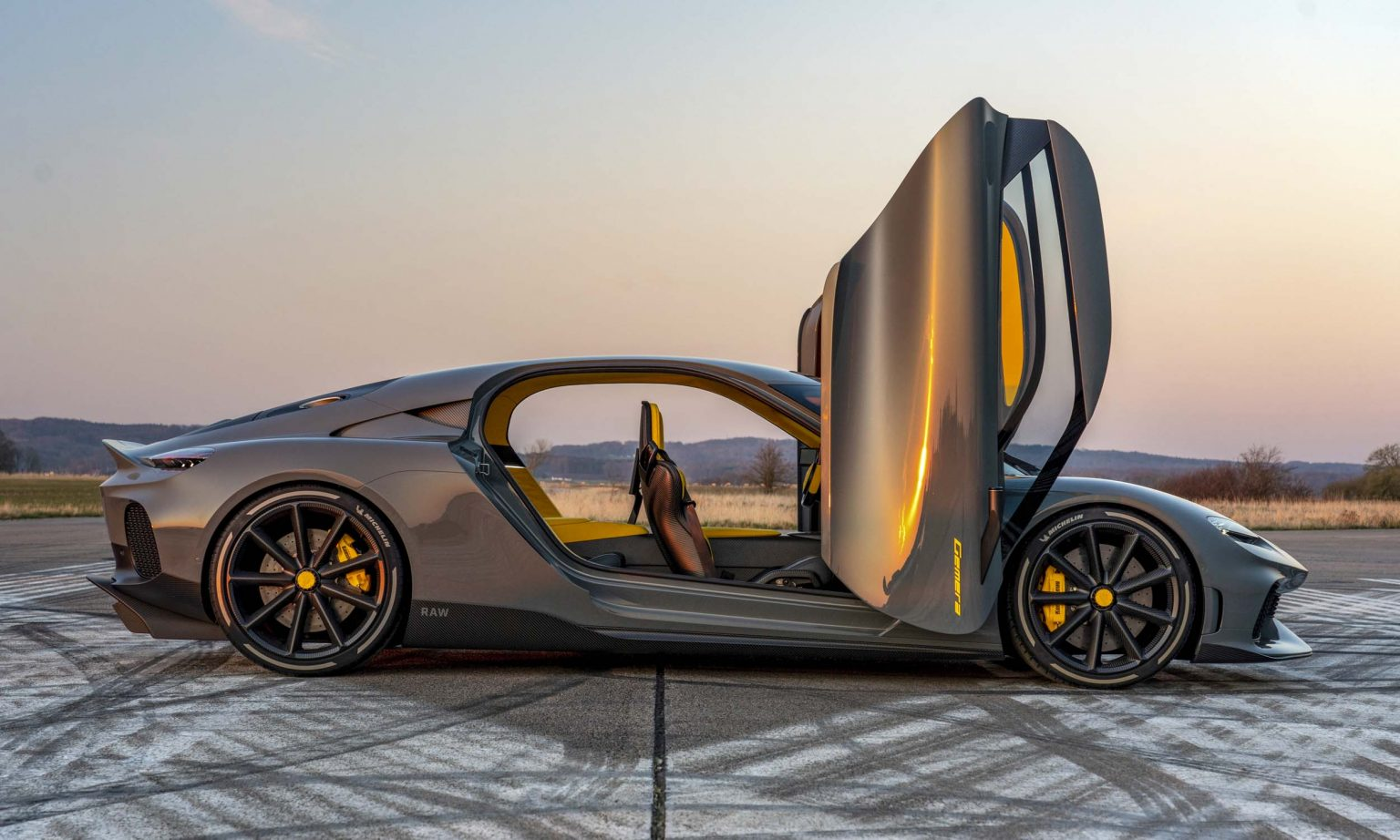
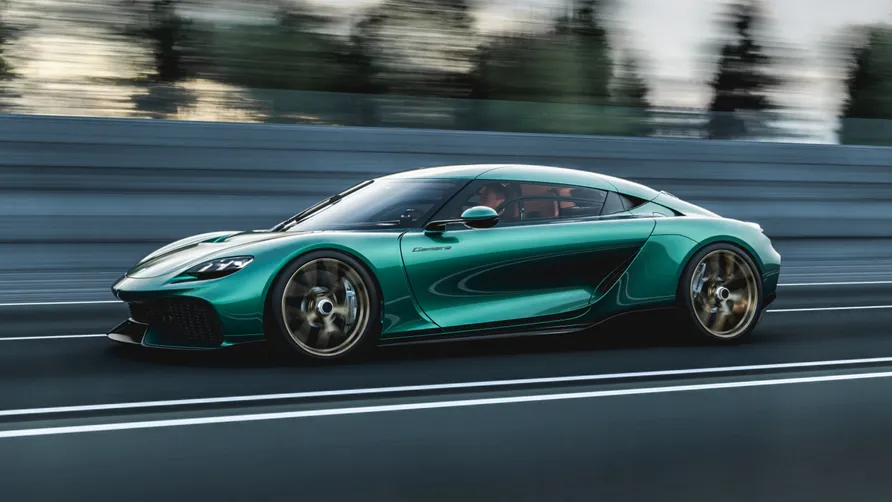
The exterior features a dramatic silhouette defined by a long body, low roofline, wide stance, and carefully sculpted surfaces. Its styling combines the recognizable design language of Koenigsegg with proportions intended to accommodate four passengers. Large doors and a B-pillarless entry design help provide access to the cabin, while the flowing bodywork maintains the appearance of an exclusive performance vehicle rather than a conventional family-oriented grand tourer.
The vehicle measures approximately 4,975 millimeters in length and has a wheelbase of around 3,000 millimeters. Published width measurements can vary depending on whether exterior mirrors are included, so readers should consult the relevant technical specification for an exact figure. Carbon-fiber construction contributes to its performance-focused design, while personalized paint finishes and exterior options allow owners to create distinctive vehicles. Specific customization choices depend on the final production specification and order.
Koenigsegg Gemera Interior and Comfort Features
Inside, the cabin provides four individual seats, separating this hypercar from many competitors designed for only two occupants. The seating arrangement is intended to accommodate adults in both rows, while premium materials and comfort-oriented equipment support longer journeys. Available features may include heated seating, electric adjustment, and carefully selected upholstery, depending on the specification. This emphasis on passenger comfort reflects the Mega GT philosophy behind the vehicle’s development.
Technology also plays an important role in the interior experience. Reported equipment includes front and rear infotainment displays, Apple CarPlay, wireless phone charging, and an 11-speaker audio system. The unusual convenience features include eight cup holders, with four designed to heat drinks and four to cool them. Buyers should confirm which features are included with their chosen configuration instead of assuming every available technology is standard across all versions.
Luggage Space and Everyday Practicality
One of the vehicle’s most distinctive advantages is its effort to combine high performance with useful passenger and luggage space. Koenigsegg has described the car as capable of accommodating four adults and four carry-on suitcases. This makes it an interesting option for owners who want to travel with companions without giving up the excitement and exclusivity associated with a hypercar.
However, the vehicle remains a specialized performance machine rather than a replacement for an ordinary SUV or family sedan. Its low body, considerable width, high purchase price, and specialist maintenance requirements can complicate daily use. Parking, steep driveways, passenger access, and storage should all be considered before purchasing. Although its luggage capacity is impressive for its category, it cannot match the overall practicality of a conventional family vehicle.
Hybrid Battery and Electric Driving
The hybrid powertrain combines an internal-combustion engine, electric propulsion, and a high-voltage battery. Electric assistance can provide rapid torque delivery, helping the vehicle respond quickly while complementing the power generated by the combustion engine. By coordinating multiple power sources, the system demonstrates how electrification can enhance performance rather than simply replace traditional engine technology.
It is important to understand that this vehicle is a hybrid, not a fully electric car. Electric-only capability, battery capacity, and driving range depend on the specific configuration and published technical data. Fuel consumption can also vary substantially with speed, driving style, operating mode, and road conditions. Anyone comparing hybrid hypercars should use verified, equivalent measurements rather than assuming every electrified vehicle offers the same efficiency or electric-driving capability.
Safety and Driver Assistance
A high-performance automobile requires more than an extraordinary engine; it also needs systems that support driver awareness and vehicle control. Depending on the final specification, equipment may include adaptive cruise control, lane assistance, parking support, and camera systems. The combination of electronic assistance and carefully engineered vehicle structures contributes to the overall package, although available features should always be confirmed for the individual vehicle.
Traction management, stability control, braking performance, and appropriate tires are especially important when managing substantial power. These systems serve different purposes, from supporting grip to helping the driver maintain control in changing conditions. Manufacturer equipment descriptions should not be confused with independent crash-test results. Any claim about a formal safety rating should be supported by a credible source that specifically covers the relevant model and market.
Koenigsegg Gemera Specifications at a Glance
The headline specifications reveal why this vehicle attracts attention from enthusiasts interested in advanced automotive engineering. Its V8 hybrid configuration combines substantial power with four-seat accommodation, all-wheel drive, and a specialized transmission. The figures below summarize the principal characteristics commonly associated with the V8-equipped version, although exact specifications should be checked against current official documentation before publication or purchase.
| Specification | Details |
| Manufacturer | Koenigsegg |
| Vehicle category | Four-seat hybrid Mega GT |
| Engine | 5.0-liter twin-turbocharged V8 |
| Electric motor | Dark Matter |
| Combined power | Up to 2,300 horsepower |
| Combined torque | 2,750 Nm |
| Transmission | Nine-speed LSTT |
| Drivetrain | All-wheel drive |
| Seating capacity | Four |
| Announced production limit | 300 vehicles |
| Length | Approximately 4,975 mm |
| Wheelbase | Approximately 3,000 mm |
These figures should be interpreted in context because different powertrain versions and equipment packages may have different specifications. Measurements can also vary according to the method used, while production and delivery details may change. Readers comparing the vehicle with competitors should verify whether each figure describes the original concept, a development model, or the final production configuration.
Koenigsegg Gemera vs. Other Hypercars
The Koenigsegg Gemera offers a different interpretation of the hypercar formula by combining extreme output with four seats and grand-touring ambitions. Many competing vehicles concentrate on two-seat layouts and performance-oriented packaging, whereas this model makes passenger space a central part of its identity. That difference may appeal to buyers who want to share their driving experience with family or friends without moving into a conventional luxury vehicle.
Comparisons with vehicles such as the Bugatti Tourbillon or Ferrari F80 should consider more than headline horsepower. Powertrain design, acceleration, handling, passenger space, customization, production limits, and intended use all influence the ownership experience. A higher power figure does not automatically make one vehicle better for every driver. The most useful comparison explains the strengths and compromises of each model, allowing readers to choose according to their priorities.
Ownership Costs and Maintenance
Purchasing a hypercar is only the beginning of its financial commitment. Owners may need to budget for specialized insurance, servicing, tires, secure storage, transportation, and replacement components. Because the vehicle uses advanced technology and is produced in limited numbers, maintenance may require specialist assistance rather than the services available through an ordinary repair shop. Actual expenses depend on the car’s configuration, usage, location, and service arrangements.
Customization can also influence maintenance requirements and long-term ownership considerations. Prospective buyers should request current estimates from the manufacturer or a qualified specialist and ask about service intervals, parts availability, warranty terms, and transportation arrangements. Resale value may depend on condition, provenance, specification, and collector demand, but future appreciation cannot be guaranteed. Careful financial planning is therefore as important as evaluating the vehicle’s horsepower, acceleration, or distinctive design.
Is the Koenigsegg Gemera Worth Considering?
The Gemera is especially appealing to enthusiasts who want extraordinary performance alongside passenger space and advanced technology. Its four-seat configuration, hybrid powertrain, specialized transmission, and limited production create a distinctive position in the exotic-car market. For collectors, the combination of unusual engineering and grand-touring comfort may be more compelling than a vehicle focused exclusively on track performance or maximum speed.
However, it is not a sensible choice for every driver. The expected purchase price, restricted availability, running expenses, and physical dimensions create significant barriers to ownership. Buyers should consider whether the unique combination of performance and practicality justifies these compromises. Comparing the final specifications, available equipment, and long-term ownership requirements with competing vehicles can help determine whether this exclusive hypercar matches their expectations.
Conclusion
The Koenigsegg Gemera 2026 combines extreme hybrid performance, a spacious four-seat cabin, advanced drivetrain technology, and limited production. Its V8-equipped configuration can deliver up to 2,300 combined horsepower, while its grand-touring layout challenges the traditional idea that a hypercar must sacrifice passenger comfort. These qualities make it a distinctive vehicle for enthusiasts interested in combining engineering innovation with an unusually versatile cabin.
For buyers researching this model, the most important considerations are confirmed pricing, the precise powertrain configuration, current availability, and ownership expenses. Official manufacturer information should guide decisions about specifications and equipment, particularly because the development program included different engine concepts. Ultimately, the Gemera stands out by bringing extraordinary performance and passenger comfort together, creating a hypercar designed to make high-performance touring a shared experience.
Frequently Asked Questions
How much does the Koenigsegg Gemera cost?
The final price depends on configuration, customization, and market. Buyers should contact the manufacturer or an authorized representative for current pricing and availability instead of relying on unverified estimates.
How much horsepower does the Koenigsegg Gemera produce?
The V8-equipped version produces up to 2,300 combined horsepower from its twin-turbocharged V8 engine and Dark Matter electric motor.
Is the Koenigsegg Gemera a hybrid car?
Yes. It combines an internal-combustion engine with electric propulsion and a high-voltage battery. It is not a fully electric vehicle.
How many people can sit inside the Koenigsegg Gemera?
The vehicle has four individual seats designed to accommodate four adults. It also provides luggage capacity intended to make longer journeys more practical than in many two-seat hypercars.
How many Koenigsegg Gemera cars will be produced?
Koenigsegg has announced a limited production run of 300 vehicles. Current ordering opportunities and delivery availability should be confirmed directly with the manufacturer.