







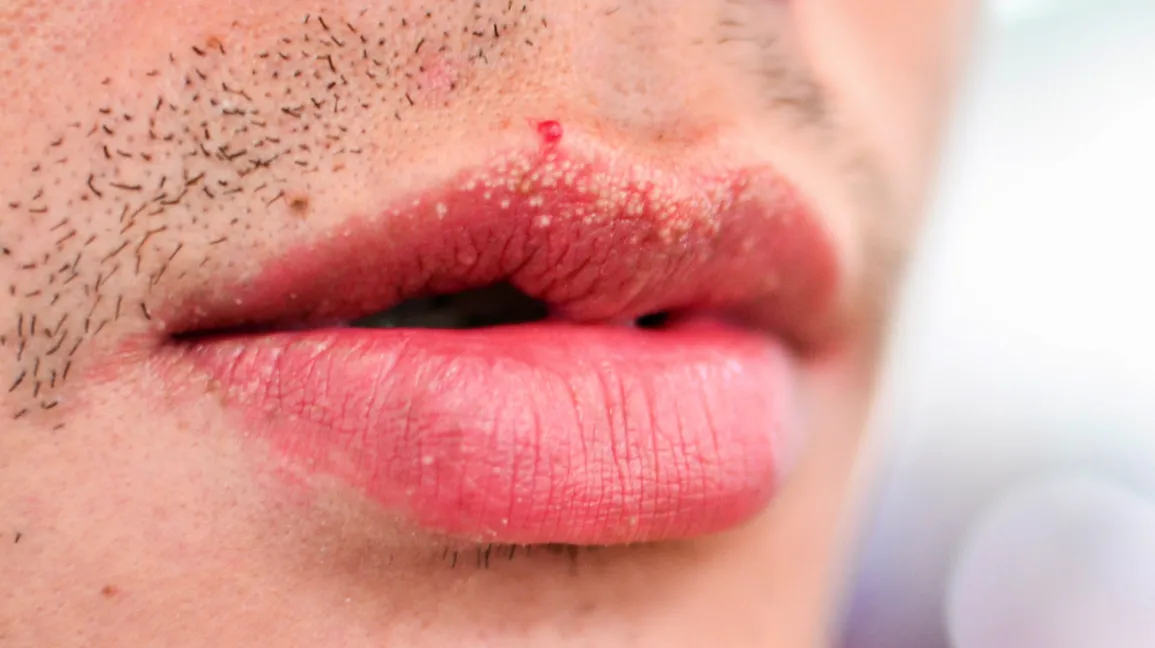
A few tiny white or yellowish bumps around the lips can be enough to send someone searching for answers. The same is true when small, painless bumps appear in other hairless areas of the body. Yet what looks unusual is often simply a normal variation in the way the skin is built. Fordyce spots are one example: common, benign sebaceous glands that become more visible with age, particularly around puberty and adulthood.
For many people, the biggest concern is not discomfort but uncertainty. Are the bumps contagious? Are they an infection? Do they need treatment? Could they be confused with another skin condition? Medical references consistently describe Fordyce spots as harmless and noninfectious, but a new or uncertain lesion—especially in a genital area—still deserves professional assessment rather than self-diagnosis.
What Are Fordyce Spots?
Fordyce spots are visible sebaceous, or oil-producing, glands that occur in areas where they are not connected to hair follicles. They are sometimes called Fordyce granules. Unlike typical sebaceous glands, which commonly empty into hair follicles, these glands can open directly onto the surface of mucosal or hairless skin. They are most often noticed around the border of the lips and inside the cheeks, although they can also occur in other anatomical locations.
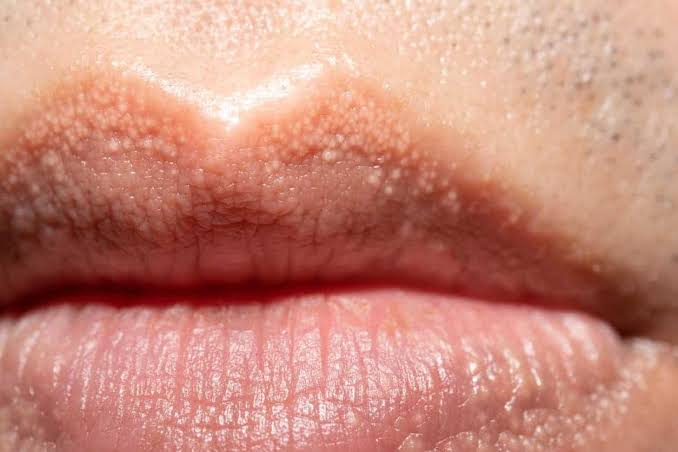
The name comes from American dermatologist John Addison Fordyce, who described the condition in the late 19th century. Today, dermatology references generally regard these visible glands as a normal anatomical variation rather than a disease. They are usually small, smooth and painless, with a white, yellowish, pale-red or skin-colored appearance. They can occur individually or in clusters, and stretching the surrounding skin can make them easier to see.
Why Do Fordyce Spots Appear?
The exact reason some sebaceous glands become more visible is not completely understood, but researchers and clinicians generally consider them a normal part of human anatomy. Some may be present earlier in life and become much more noticeable as the body changes. Hormonal changes associated with puberty can increase the size or visibility of sebaceous glands, which explains why people often notice them during adolescence or adulthood rather than in early childhood.
Sebaceous glands themselves have an important biological role. They produce sebum, an oily substance that contributes to the skin’s protective surface and helps maintain moisture. In most parts of the body, these glands are associated with hair follicles. Fordyce glands are unusual because they can occur without that hair-follicle connection. This anatomical difference explains why tiny oil glands may be visible on areas such as the lips or oral mucosa.
How Common Are They?
One of the most important facts about Fordyce spots is how common they are. DermNet reports that they are present in about 80% of adults, while Cleveland Clinic cites an estimated prevalence of roughly 70% to 80%. These figures help put the condition into perspective: visible Fordyce glands are not an unusual medical curiosity but a finding shared by a large proportion of the adult population.
Their visibility can vary considerably from person to person. Some people may have only a few subtle spots that are barely noticeable, while others may see clusters of small papules. Research has also reported that these glands become more prevalent or visible from childhood toward adulthood, with a somewhat higher frequency reported in males. However, their presence does not by itself indicate poor hygiene, infection or an underlying serious illness.
What Do Fordyce Spots Look Like?
Typically, these spots appear as tiny, slightly raised papules measuring around 1 to 5 millimeters, although individual appearance can vary. They may look white, cream-colored, yellowish, pale red or similar to the surrounding skin. On the lips, they may be especially visible along the vermilion border, while spots inside the mouth can appear on the inner cheeks. Their color and visibility can also depend on natural skin tone and lighting.
A useful characteristic is that they are usually painless and do not behave like an acute infection. They can appear in small groups or larger clusters, and stretching the nearby tissue can make them easier to identify. However, appearance alone should not be treated as a definitive diagnosis. Several other conditions can create small bumps, and some can require medical treatment. That distinction becomes particularly important when a lesion is new, changing, painful or otherwise unusual.
Are Fordyce Spots Contagious?
No. Fordyce spots are not contagious, and they are not caused by a virus or bacteria. Medical references specifically classify them as a normal benign finding rather than a sexually transmitted infection. They cannot be passed from one person to another through ordinary skin contact.
This point matters because people can understandably become worried when they notice small bumps around the mouth or in other sensitive areas. However, the presence of Fordyce spots does not mean that someone has an infection or has acquired a sexually transmitted disease. At the same time, a person should not assume that every small bump is a Fordyce spot simply because these glands are common. If a healthcare professional is uncertain about a lesion, examination is the safest way to establish what it actually is.
How Are Fordyce Spots Diagnosed?
In many cases, a dermatologist or other healthcare professional can recognize Fordyce spots from their appearance and location. A biopsy is rarely necessary when the clinical features are typical. Doctors may look at the size, color, distribution and behavior of the bumps while also considering whether symptoms such as pain, irritation, bleeding or rapid change are present.
Diagnosis becomes particularly important when bumps appear in a genital area because several unrelated conditions can look similar at first glance. DermNet notes that some sexually transmitted infections can initially resemble normal sebaceous glands. Genital warts, for example, are caused by human papillomavirus and can produce small growths that may be mistaken for harmless anatomical structures. This is why professional evaluation is more useful than trying to compare a lesion with photographs online.
Fordyce Spots vs. Other Skin Conditions
The appearance of tiny bumps can overlap across many skin conditions, making visual self-diagnosis unreliable. Milia, sebaceous hyperplasia, certain cysts, genital warts and other benign papules can sometimes create a similar visual impression. The location, texture, size and associated symptoms help clinicians distinguish between them. Cleveland Clinic also notes that Fordyce spots can be confused with conditions such as milia and epidermal inclusion cysts.
The key difference is often the overall clinical pattern. Fordyce spots are typically small, benign and painless. A lesion that suddenly appears, becomes painful, develops an open area, bleeds, changes rapidly or produces other concerning symptoms does not automatically fit that pattern. Rather than trying to force a diagnosis, it is better to have an unusual lesion assessed by a qualified healthcare professional.
Do Fordyce Spots Need Treatment?
Usually, no. Because Fordyce spots are benign and do not normally cause health problems, treatment is generally unnecessary from a medical standpoint. Many people simply leave them alone. The main reason someone may seek treatment is cosmetic concern or uncertainty about the diagnosis.
This distinction is important because the internet contains many claims about eliminating these spots permanently. Not every suggested remedy has strong evidence behind it, and aggressive attempts to remove small skin lesions can create irritation or scarring. Cleveland Clinic specifically warns that squeezing the spots does not make them disappear and can lead to inflammation. A dermatologist can explain whether treatment is appropriate and which approach carries the lowest risk for a particular location.
What Treatments Can Reduce Their Appearance?
When treatment is requested for cosmetic reasons, clinicians may discuss procedures designed to reduce or remove the visible glands. Options described in medical references include electrosurgery or electrodessication, carbon dioxide laser treatment, cryotherapy and, in selected cases, micro-punch procedures. Some topical retinoid treatments may also be considered depending on the location and individual circumstances.
However, treatment does not mean that everyone should attempt to remove these spots. Procedures can cause temporary discomfort, irritation, pigment changes or scarring, and the risks depend on the technique and body location. For that reason, cosmetic treatment should be discussed with a dermatologist rather than performed with unverified home methods. The safest choice for most people is simply observation when the diagnosis is clear and there are no troublesome symptoms.
Why Online Home Remedies Deserve Caution
Search results often promote household substances, oils or acids as quick ways to make visible bumps disappear. The problem is that skin is not a simple surface that can safely be stripped or dried without consequences. Products that irritate the skin can cause redness, inflammation or injury, particularly on delicate areas such as the lips or mucosal tissue.
Even when a home remedy appears harmless, it may not address the actual cause of a bump. If the lesion is not a Fordyce spot in the first place, treating it with an unproven substance could delay an appropriate diagnosis. Medical care is particularly important when a lesion is painful, changing, persistent or associated with other symptoms. In those situations, identifying the condition comes before trying to improve its appearance.
When Should You See a Doctor?
A healthcare professional should evaluate bumps that are new, changing, painful, inflamed, bleeding or otherwise different from the usual pattern of harmless sebaceous glands. Medical assessment is also appropriate when the diagnosis is uncertain. This is especially relevant for bumps in genital areas because several different conditions can look alike during their early stages.
Seeing a dermatologist does not mean that something serious is necessarily wrong. In many cases, the appointment simply provides reassurance and confirms that the bumps are a normal anatomical variation. That reassurance can be valuable because online searches often make harmless skin findings seem more alarming than they really are. A professional examination can separate a common benign condition from something that actually needs treatment.
What Recent Medical Understanding Tells Us
Modern dermatology increasingly emphasizes distinguishing normal anatomical variation from disease. Fordyce spots fit that broader principle well. They are visible sebaceous glands, not a contagious infection, and the majority of cases require no medical intervention. Research has also helped clarify their microscopic structure, showing that the glands can sit close to the surface and open directly outward rather than through a conventional hair follicle.
That understanding also explains why these spots can become a source of cosmetic anxiety despite being medically insignificant. Improved access to high-resolution smartphone cameras and online health searches means people can notice tiny features of their skin that might previously have gone unnoticed. The future of dermatology is therefore likely to involve not only better treatments but also better public education about what constitutes a normal skin variation and when professional evaluation is warranted.
Key Takeaways
Fordyce spots are common visible sebaceous glands that usually become more noticeable around puberty and adulthood. They are generally small, painless and benign, and medical references estimate that roughly 70% to 80% of adults have them.
They are not contagious and are not sexually transmitted infections. Their most common locations include the lip border and inner cheeks, although they can occur in other hairless areas. Most people do not need treatment, and cosmetic procedures should be considered only after a healthcare professional confirms the diagnosis.
The practical lesson is simple: do not squeeze, pick or aggressively treat unexplained bumps. If something looks unusual, changes over time, causes symptoms or appears in a location where other conditions can resemble it, professional evaluation is the most reliable next step.
Conclusion
Fordyce spots may look unusual, but their medical story is far less alarming than their appearance can suggest. They are common, benign sebaceous glands that many people have without realizing it. For most individuals, the appropriate response is reassurance rather than aggressive treatment.
The most useful step is understanding the difference between a normal skin variation and a lesion that genuinely needs attention. If the appearance is typical and there are no concerning symptoms, treatment may not be necessary. If the diagnosis is uncertain, particularly when bumps occur in sensitive areas, a dermatologist can provide clarity. Continue exploring reliable dermatology information, but when your own skin changes, let a qualified healthcare professional make the final diagnosis.
Frequently Asked Questions
Are Fordyce spots harmful?
No. They are generally benign sebaceous glands and do not normally cause health problems.
Are Fordyce spots an STI?
No. They are not sexually transmitted infections and are not contagious. However, other conditions can resemble them, so uncertain genital bumps should be medically assessed.
Why do Fordyce spots become more visible with age?
They often become more noticeable during puberty and adulthood, when hormonal changes can make sebaceous glands more prominent.
Can Fordyce spots disappear naturally?
Their visibility can vary over time, but they are generally considered a normal anatomical feature rather than a condition that needs to be cured.
Can you squeeze Fordyce spots?
Squeezing is not recommended. It will not reliably remove them and can cause irritation or inflammation.
What is the best treatment for Fordyce spots?
Most cases require no treatment. If their appearance causes significant concern, a dermatologist can discuss options such as laser or electrosurgical procedures.
When should I see a doctor about small bumps?
Seek professional advice if bumps are new, painful, rapidly changing, bleeding, inflamed or difficult to distinguish from another condition.